

L-703S 4-Axis Lathe & Turning-Center Spindle Alignment Laser System
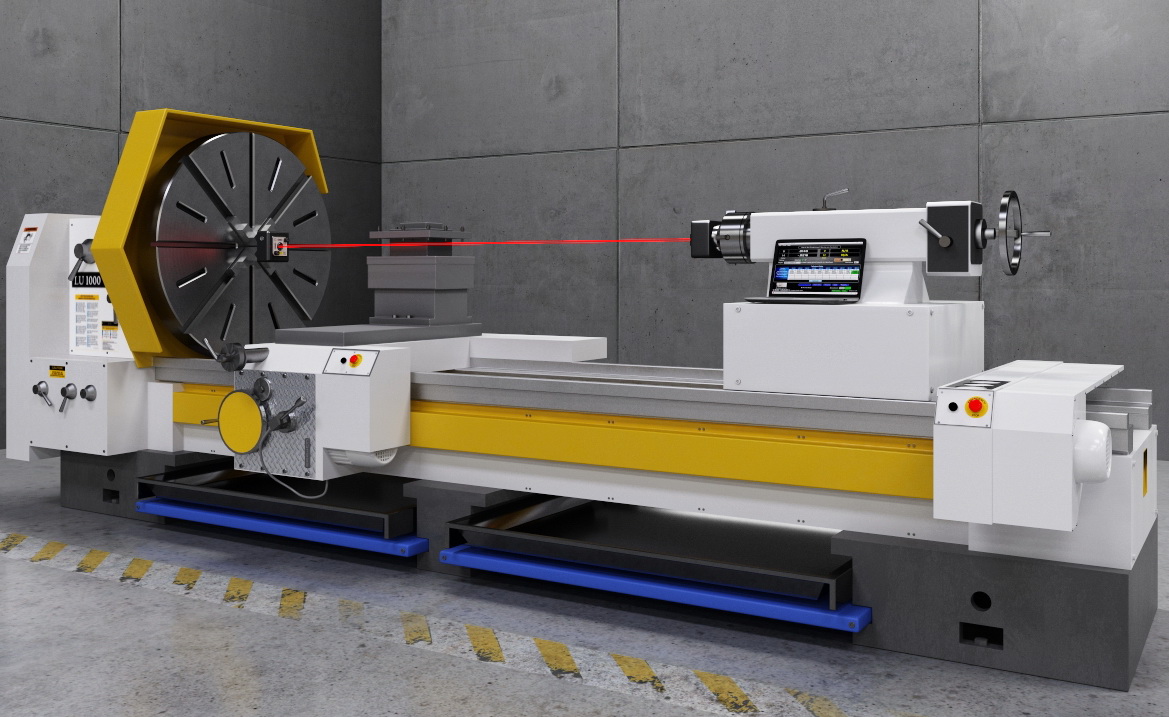
Many years of transfer-line spindle alignment experience using our L-700 Spindle Alignment Laser, along with many improvements, went into the newly designed L-703S 4-Axis Spindle Alignment Laser System that makes checking and adjusting the alignment of lathes and turning centers much easier and much faster:
- Aligns lathes up to 70% faster than conventional methods such as use indicators and alignment bars.
- Simple setup and minimal training needed.
- With a range of up to 50 ft. (15 m), the L-703s can check the alignment of even the largest lathes.
- Headstock-to-tailstock spindle alignment checks in 4 axes with our newly designed T-1296 5-Axis Multi-Purpose Target (V & H center and V & H angular, scanning).
- Target data updates in real time, so alignment errors can be fixed easily and quickly without changing the setup.
- V & H center resolution of .00001 in. (0.00025 mm) and V & H angular resolution of up to .00002 in/ft (0.002 mm/m).
- Powerful Windows-based Lathe10 Software features our Easy-Guide™ approach that guides the user through the alignment with a 6-step process. On-screen help instructions can help refresh you memory if you haven’t used it in a while.
- Lathe10 also features a real-time 4-axis alignment screen to re-align spindles. It also corrects mounting errors, making the setup and alignment go even faster.